
Cochinita Pibil Recipe (Yucatan-Style Pork)
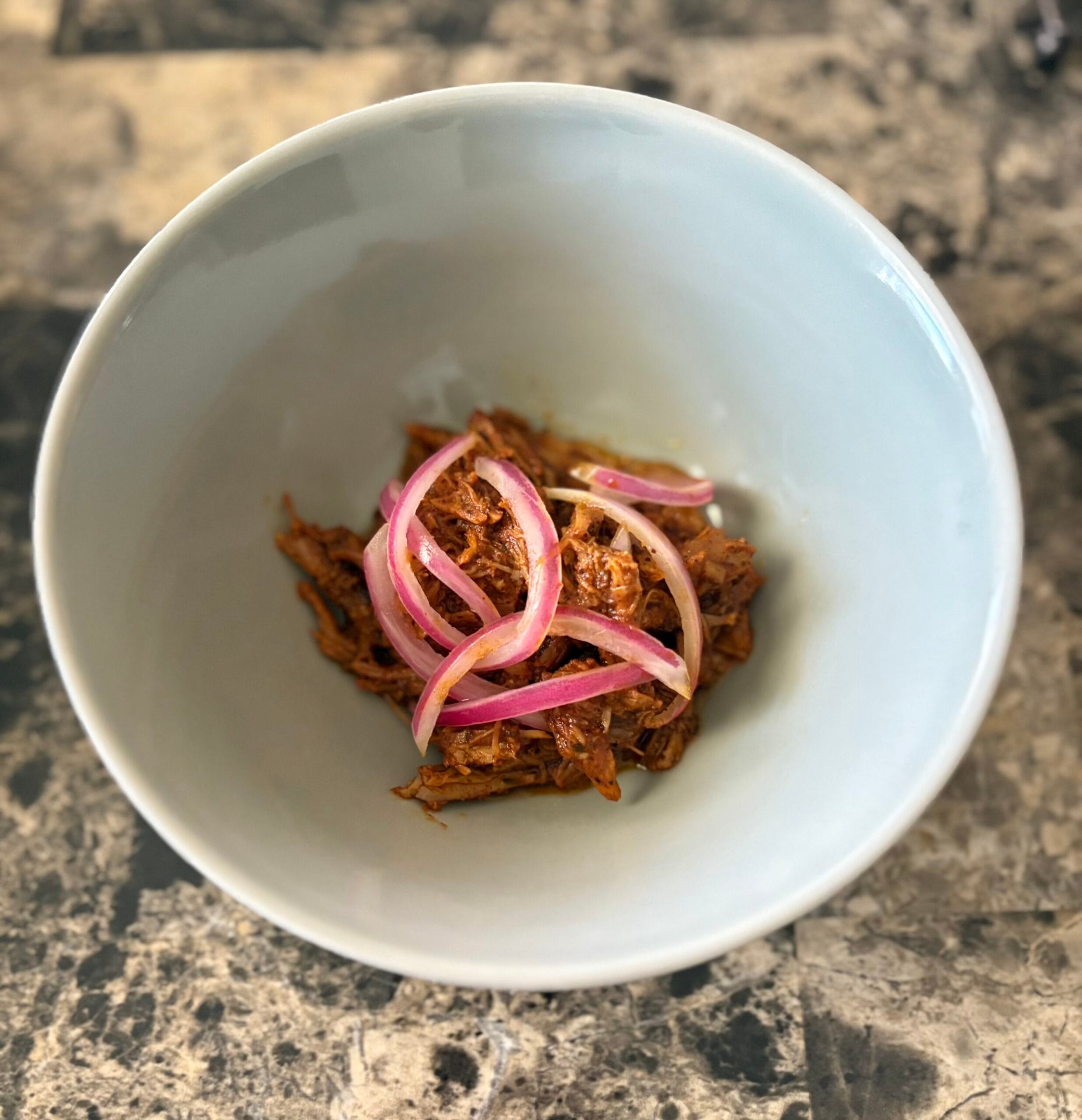
It’s citrusy, savory, succulent, and with a hint of sweetness. Cochinita pibil, might become one of your new favorite ways to cook pork.
The first time I tried cochinita pibil was when I was on vacation in Cancun, Mexico. I was on a group tour and we stopped by a restaurant to have lunch. Before we went into the restaurant I remember the tour guide telling everyone to try the conchinita pibil because it was one of the classic dishes of the region. I had already heard about the dish before, but to be honest, at the time I had no idea what it consisted of or how it was made. I only knew it was a pork dish, but didn’t know about the preparation and taste.
When I tried it at the restaurant, I really enjoyed the flavors of the pork. It was also served with pickled red onions which gives the meat a nice bright and fresh flavor. Pickled red onions and cochinita pibil are usually always served together. It was definitely one of my favorite things I ate on that trip.
This dish has a special flavor and very unique to the region of the Yucatan peninsula. The taste and flavors were ones I wasn’t as familiar with, especially since my family is from northern Mexico where the cuisine and flavors are completely different. This is what I enjoy about Mexican cuisine though, it changes so much from region to region!
What is Cochinita Pibil?
Cochinita pibil is a traditional Mexican dish from the state of Yucatan. Although these days it’s widely popular in the states of Quintana Roo and Campeche as well as the rest of Mexico. The main ingredients for cochinita pibil are recado rojo or achiote paste, sour orange also known as seville orange, and pork. Sour orange can be difficult to find, so sometimes a mix of lime juice, orange juice, and grapefruit juice can be used. This blend creates a similar flavor to the sour orange which is sour, tangy, and bitter.
This is a prehispanic dish that was originally cooked underground in a pit, similar to a barbacoa. Cochinita pibil is a dish with a rich cultural significance in Mexico because the style and even some of the seasonings used to flavor the meat, is still the same way the Mayas did it many centuries ago! The main difference with how it’s still made today was the type of meat used. The Mayas typically used deer or turkey to cook the dish.
What is Recado?
In the region of the Yucatan peninsula there are pastes made with spices and seasonings that are often used in the cuisine of this region. These pastes are called recado and there are several different types, each with different spices and seasonings. Some popular ones are recado rojo or red recado, recado negro or black recado, and recado verde or green recado. The one used for preparing cochinita pibil is recado rojo. Recado rojo is sometimes referred to as achiote or annatto, and it’s how you might see it labeled at most grocery stores. Achiote paste can be found in most Mexican grocery stores or in the international aisle at your local grocery store.
Recado rojo can typically be made with achiote seeds, cinnamon, garlic, oregano, cumin, sour orange, clove, salt, and black pepper. This combination of ingredients creates a beautiful and very unique flavor that can be used on meats as a marinade or rub. The achiote seeds are what give the red recado its color.
What is Pibil?
The word pibil is of Maya origin. It comes from the Maya word piib which means underground oven. Over the years the word became pibil, which refers to food cooked in an underground oven. So cochinita pibil translated into English would be something like little pig cooked in underground oven.
To build these underground ovens, the Mayas would dig a hole, put some wood to create a fire, and then they would place a layer of rocks or stones over this fire. They would then wrap the deer or turkey meats in banana leaves and place these over the rocks. The wrapped deer or turkey meat would then cook slowly and gently which would result in tender meat. This cooking technique and process is very similar to barbacoa. I find it fascinating that two different prehispanic cultures of Mexico used underground ovens to cook their foods.
In present day Mexico, there are still some places where cochinita pibil is cooked in these underground ovens. This happens primarily in small towns or rural areas, mainly in the Yucatan peninsula. In bigger cities or more urban areas, cochinita pibil is cooked in an oven, pressure cooker, slow cooker, or on the stove. These are cooking techniques that can be used in home kitchens which can simulate these underground ovens the Mayas cooked in.
Types of Meat
The type of meat used to cook in pibil style changed after the arrival of the Spaniards. They brought different types of meats with them to Mexico like beef, lamb, goat, and pork. As a result, the choice for cooking in pibil style became pork. Another popular meat option used for cooking in pibil style is chicken, and it’s known as pollo pibil. The preparation of the chicken is the same as in the pork version and so are the seasonings and ingredients.
What cut of meat to use?
There are several cuts of meat that can be used for cochinita pibil. Some good ones are pork butt, shoulder, ribs, or country style ribs. These are cuts of meat that have a good amount of fat and connective tissue, which benefit from slow cooking at low temperatures.
The slow cooking at low temperatures helps the fat and connective tissue melt which helps the meat stay moist and juicy. This results in a succulent and very tender pork, with a rich flavor. The fat and juices that renders out of the pork creates a broth called consome, which can be spooned over the meat to keep it moist and also adds a rich flavor when serving.
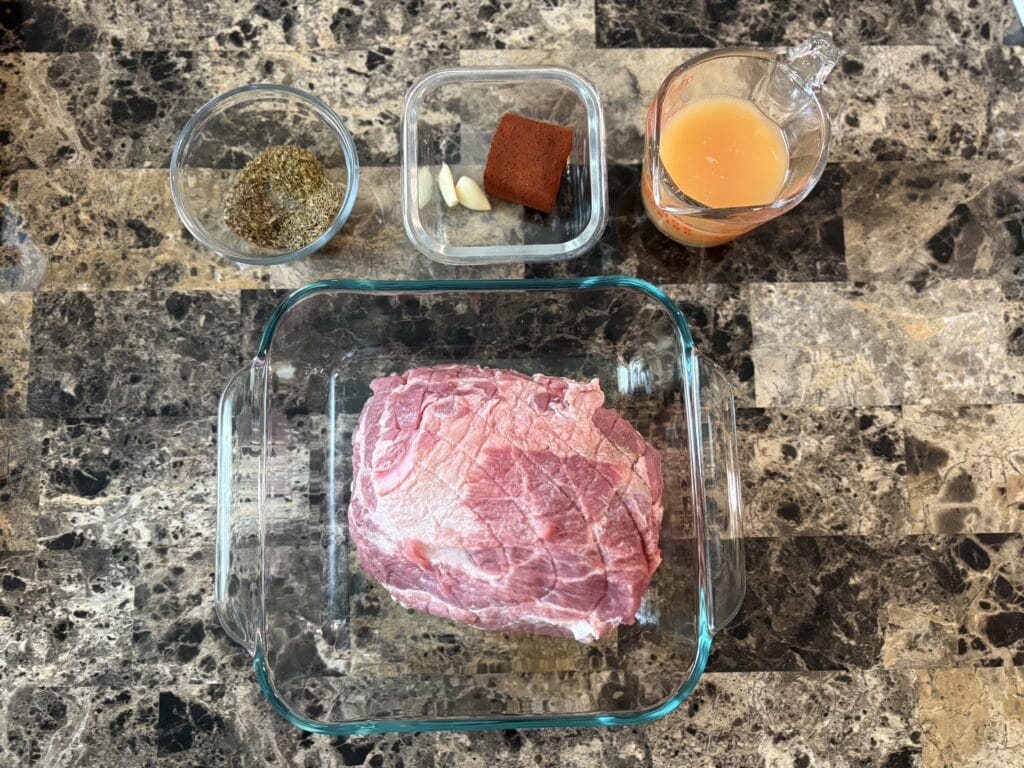
How to make cochinita pibil?
- Combine achiote paste, lime juice, orange juice, grapefruit juice, salt, black pepper, minced or grated garlic, thyme, oregano, and marjoram into a bowl. Stir until achiote paste is dissolved. Or combine these ingredients in a blender and blend until achiote paste is dissolved.
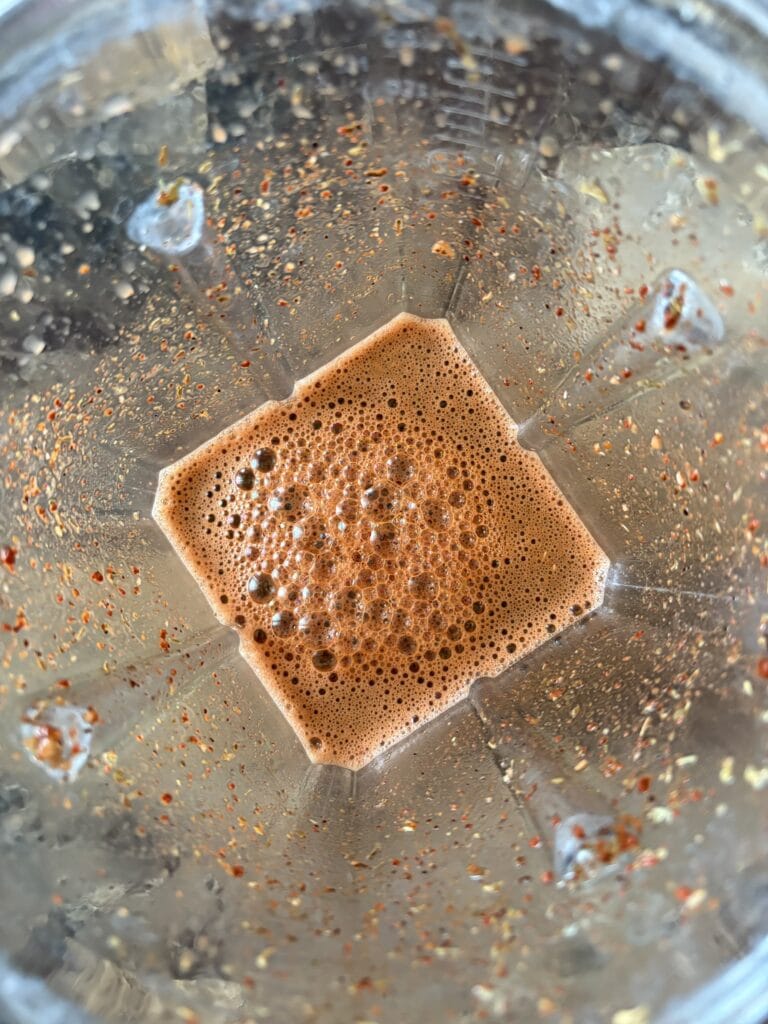
- Place pork in a bowl or container and add achiote mixture to it. Let it marinate in the refrigerator for at least 2 hours or overnight. If you’re short on time, no need to marinate (skip to the next step). The dish will still be delicious.
- Preheat oven to 300°F.
- Transfer the pork to a large pot along with the all the marinade.
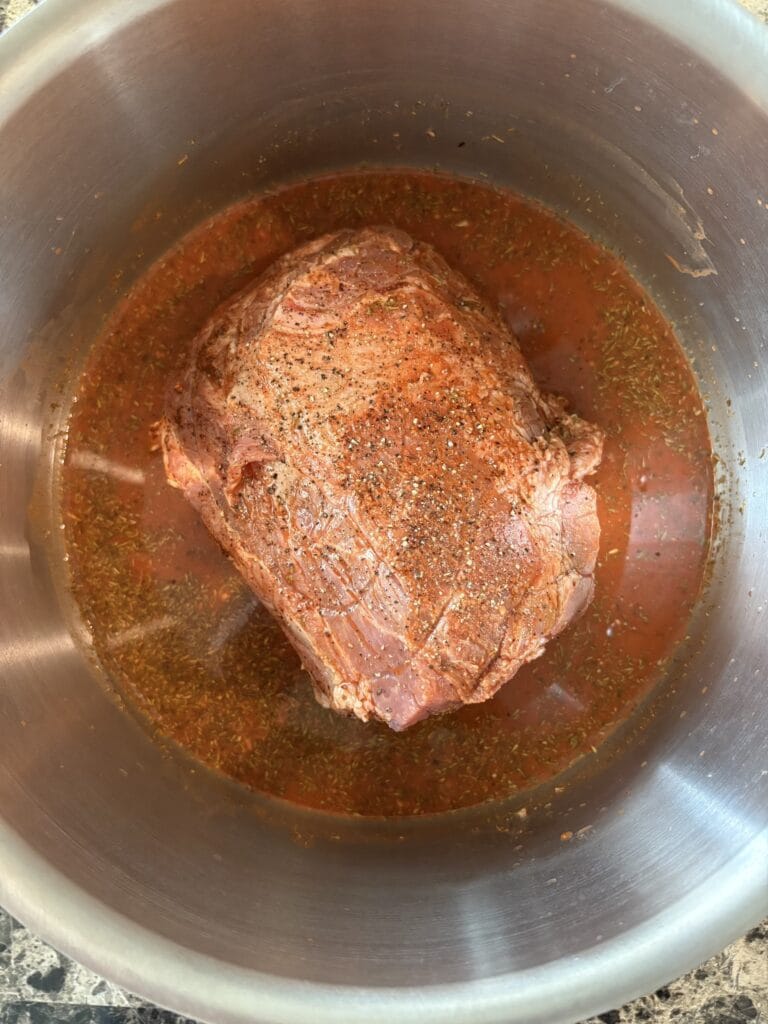
- Add enough water so that half to three-quarters of the meat is submerged.
- Braise in the oven for 3 hours or until meat is tender and is easily shredded with a fork.
- Remove the pork from the pot and transfer to a bowl. If necessary let it cool down and then shred the meat.
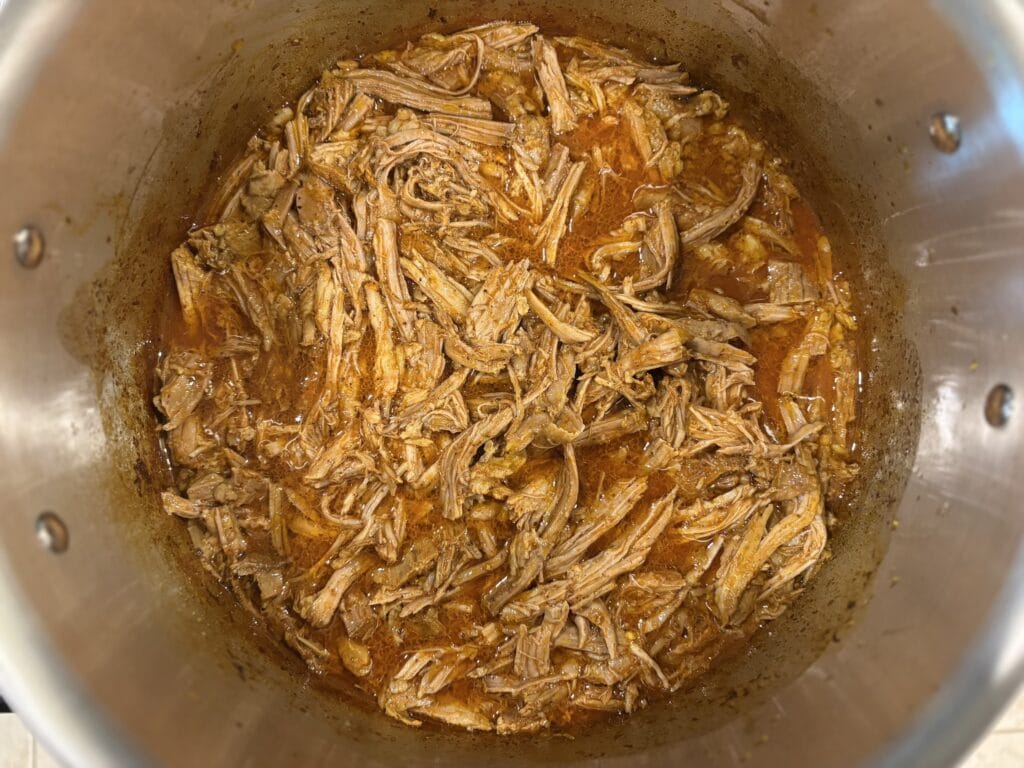
- Return the shredded meat to the pot. Turn the heat on the stove to a low to medium low. Heat meat for a few minutes to warm back up if needed and to let it soak up more of the consome or juices.
Tips and Suggestions
- You can also use pork ribs, country style ribs, or pork shoulder. Cuts of pork that have plenty of fat and connective tissue, which when you cook at low temperatures and for several hours it becomes tender.
- You can cut the pork butt or pork shoulder into medium to large chunks if desired. This will make it easier for the meat to get cooked and it can reduce the cook time as well.
- Check after three hours if the meat is tender when shredded with a fork. If it shreds easily, it’s ready. If it’s not ready yet, continue cooking and check every 15 to 30 minutes or until the meat is tender. The internal temperature of the meat should reach to about 205°F for very tender results.
- Spoon some of the consome or broth from the juices the meat releases during the slow cooking onto your cochinita pibil. It will provide an extra layer of rich flavor to the meat.
How to Store Cochinita Pibil
Cochinita pibil can be stored in the refrigerator for up to 4 days or in the freezer for up to 3 months. Make sure to store in an airtight container.
How to Reheat Cochinita Pibil
To reheat cochinita pibil, add the leftovers to a pan and add a little water. The water will help generate steam. Cook on medium heat and covered for about 5 to 10 minutes or until warmed through.
How to Eat Cochinita Pibil
One of the best ways to enjoy cochinita pibil is in a taco with pickled red onions and a habanero salsa. It’s a classic way of eating it like they do in Yucatan! You can build your taco with some corn tortillas, add your cochinita pibil meat, top the meat with some pickled red onions, and finish it off with a salsa if desired. The juicy, succulent, citrusy, and sweetness from the pork meat with the tangy pickled red onions make a perfect combination of flavors and textures.
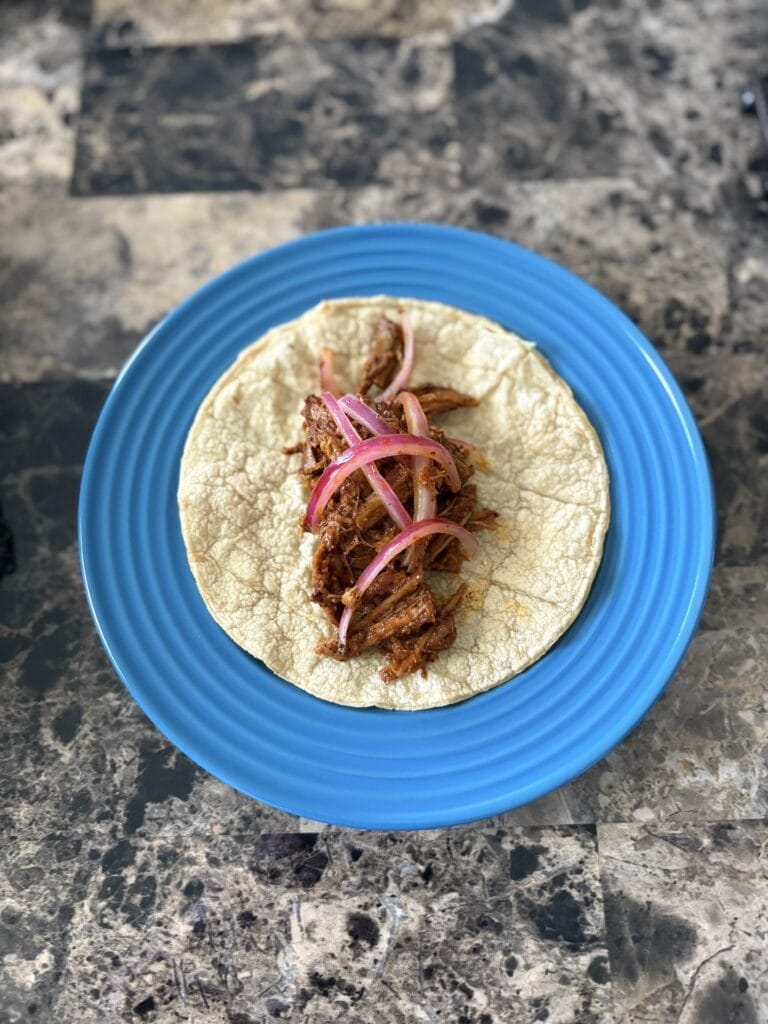
Other ways to eat cochinita pibil are in a torta, another classic in Yucatan! Like with the taco you have to add the pickled red onions, this is the authentic way to eat this dish. Of course you can enjoy this dish anyway you want. It can work over rice, in a burrito, on a tostada, or in a sandwich. Whatever way you decide to eat cochinita pibil, you’ll definitely have a wonderful meal.
I hope you enjoy this cochinita pibil recipe. Please let me know in the comments below if you make it and how it went.
Gracias y provecho!
Raul
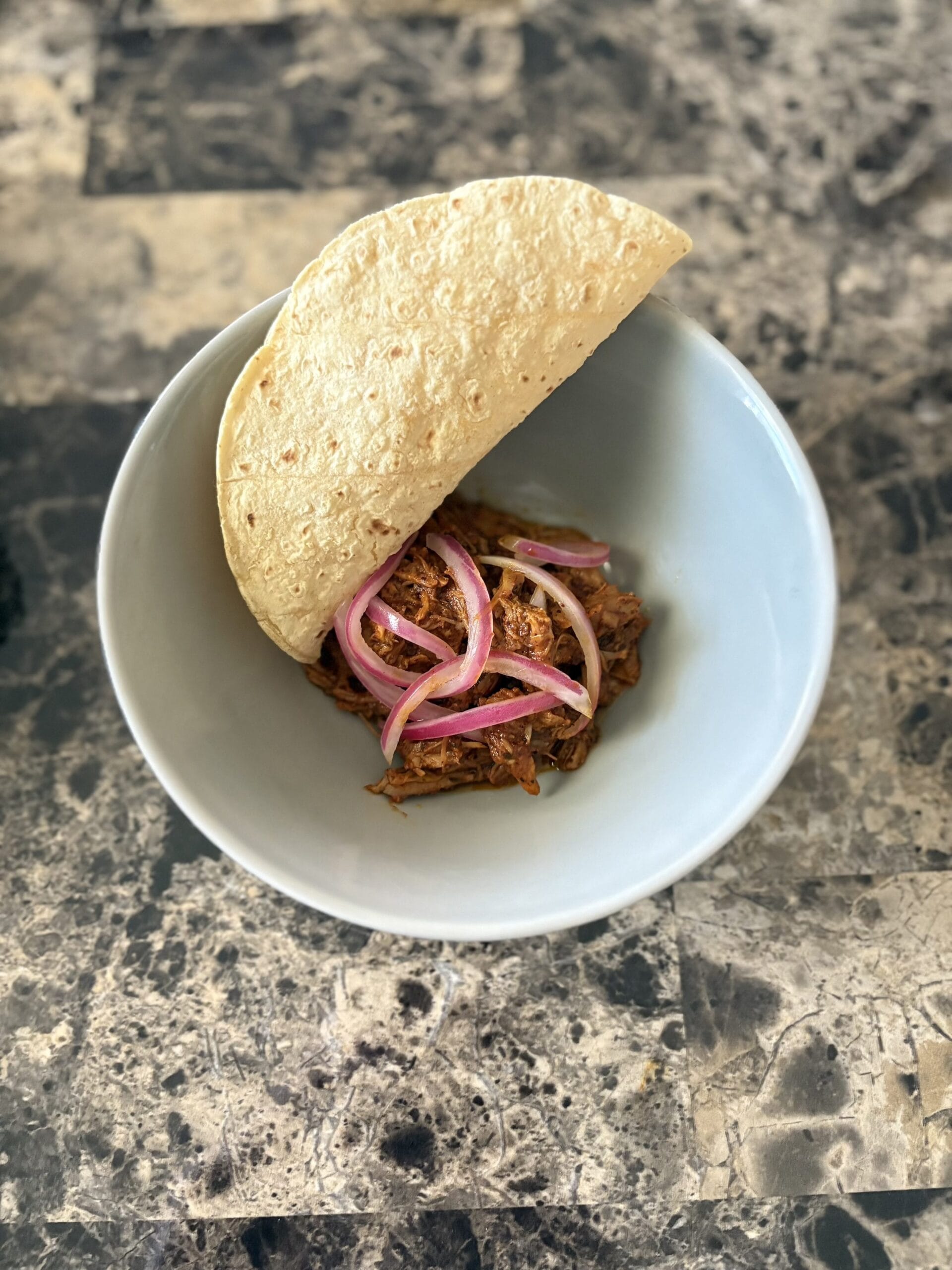
Cochinita Pibil (Slow Roasted Pork)
Ingredients
Method
- Combine achiote paste, sour orange or (substitute lime juice, orange juice, grapefruit juice), salt, black pepper, minced or grated garlic, thyme, oregano, and marjoram into a bowl. Stir until achiote paste is dissolved. Or combine these ingredients in a blender and blend until achiote paste is dissolved.
- Place pork in a bowl or container and add achiote mixture to it. Let it marinate in the refrigerator for at least 2 hours or overnight. If you're short on time, no need to marinate (skip to the next step).
- Preheat oven to 300°F.
- Transfer the pork to a large pot along with the all the marinade.
- Add enough water so that half to three-quarters of the meat is submerged.
- Braise in the oven for 3 hours or until meat is tender and is easily shredded with a fork.
- Remove the pork from the pot and transfer to a bowl. If necessary let it cool down and then shred the meat.
- Return the shredded meat to the pot. Turn the heat on the stove to a low to medium low. Heat meat for a few minutes to warm back up if needed and to let it soak up more of the consome or juices.
- Serve with corn tortillas, pickled red onions, and habanero salsa
Notes
- You can also use pork ribs, country style ribs, or pork shoulder. Cuts of pork that have plenty of fat and connective tissue, which when you cook at low temperatures and for several hours it becomes tender.
- You can cut the pork butt or pork shoulder into medium to large chunks if desired. This will make it easier for the meat to get cooked and it can reduce the cook time as well.
- Check after three hours if the meat is tender when shredded with a fork. If it shreds easily, it’s ready. If it’s not ready yet, continue cooking and check every 15 to 30 minutes or until the meat is tender. The internal temperature of the meat should reach to about 205°F for very tender results.
- Spoon some of the consome or broth from the juices the meat releases during the slow cooking onto your cochinita pibil. It will provide an extra layer of rich flavor to the meat.